Bella's Mental Condition Reports
Poor ThingsBella Baxter's Mental Condition Reports are a collection of psychiatric assessments presented as documentary evidence that Bella Baxter is sane and is not General Sir Aubrey de la Pole Blessington’s former wife. Their conclusions counter the General’s identification of her with his wife and challenge the attempt to treat her independence and history as signs of illness.
Production and Presentation
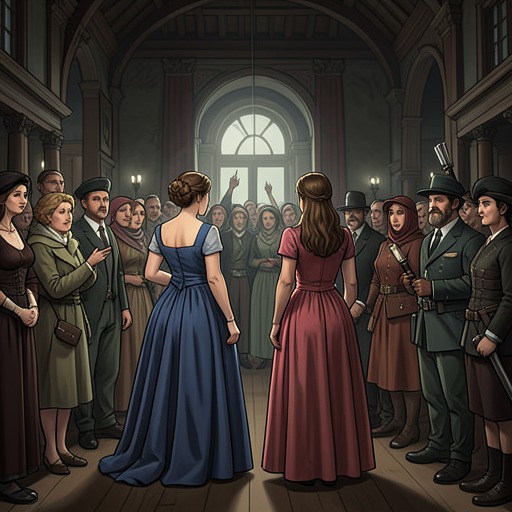
The reports followed examinations of Bella during a world tour, when she was seen by specialists including Professor Jean-Martin Charcot, Golgi, Kraepelin, Breuer and Korsakoff. At the confrontation over her identity, Godwin Baxter points out that the reports are signed and witnessed, with English translations attached, and are lying on the table for inspection. He asks Dr. Prickett to examine them or take them away for verification, making the papers a material challenge to the General’s account rather than a merely private medical opinion.
The collection does not present its experts as speaking in one uniform professional language. Baxter explains that their terminology differs because they approach the mind from different standpoints. Kraepelin and Korsakoff share Dr. Prickett’s low opinion of Professor Jean-Martin Charcot, whom Prickett regards as a charlatan, while acknowledging that Charcot is highly regarded on the continent. The reports’ force therefore rests not on complete agreement about psychiatric theory, but on the convergence of their assessments of Bella.
Findings on Bella
The examiners are unanimous in describing Bella as sane, strong and cheerful, with a vigorously independent attitude to life. They attribute her lack of memories from before her arrival to amnesia caused by a skull injury and the loss of an unborn child. Apart from that loss of earlier memory, the reports describe her balance, sensory discrimination, recollective ability, intuition and logical powers as exceptionally keen.
The reports also reject a long range of diagnoses and supposed abnormalities, including mania, hysteria, phobia, dementia, melancholia, neurasthenia, aphasia, catatonia, irrational belligerence and unhealthy reticence, as well as a variety of sexual and behavioral classifications. Their broad conclusion is that Bella’s independent manner is not evidence of insanity. Professor Jean-Martin Charcot goes further, suggesting that amnesia may have enlarged her intelligence by requiring her to relearn things when old enough to think about them, unlike people whose thinking remains shaped by childhood training.
The assessments record one conspicuous tendency: Bella’s linguistic enthusiasm. Tests conducted in the winter of 1880–81, when she was learning to read, found an intense interest in synonyms, assonance and alliteration, at times approaching echolalia. Kraepelin interprets this as an instinctive compensation for her poverty of sensory reminiscence; Professor Jean-Martin Charcot considers that it might make her a poet; and Breuer expects it to diminish as she gains more memories. The reports note that it has done so, and that Bella’s speech is no longer eccentric.
Role in the Identity Dispute
The collection’s decisive claim is that Bella cannot be the General’s former wife. Baxter cites the assessments to distinguish the woman examined on the tour, whom he calls Bella Baxter, from the drowned woman who came to consciousness at his home. He invokes the reports’ account of her amnesia and mental capacities against the General’s insistence that he knows his wife, making the documents central to the dispute over who Bella is.
The reports also expose the limits of medical authority within the confrontation. The General’s solicitor dismisses them as irrelevant quibbles rather than addressing their findings. Meanwhile, Professor Jean-Martin Charcot’s observation that Bella is unusually free from the prejudices of her compatriots is itself qualified in the account as an expression of national prejudice. The reports thus support Bella’s independence while showing that even favorable expert testimony carries the assumptions of its period.